
Home Remodeling in Belleair Beach, FL
Local Custom Home Building Expertise
Building custom homes in Belleair Beach requires mastery of coastal regulations and waterfront living. Custom Home Construction | Belleair Beach, FL means navigating elevation rules, impact-resistant systems, and Gulf-view design. We build homes on the barrier island between the Intracoastal Waterway and the Gulf of Mexico—where every project meets strict FEMA flood compliance and hurricane-rated specifications. Properties here span private docks, boat slips, and premium waterfront estates. This page covers what custom building in Belleair Beach involves, from permit requirements to coastal-specific construction methods.
Belleair Beach is one of Florida's most exclusive residential communities. Limited to roughly 1,600 residents across just 1.7 square miles, it borders Clearwater and Sand Key Park to the north and Indian Rocks Beach to the south.
Custom homes here serve families, empty nesters, and retirees who value privacy, waterfront access, and architectural control. The community has no HOAs, meaning homeowners enjoy freedom in design—but must meet stringent local, state, and federal coastal codes.
How Custom Home Building Works in Belleair Beach
Every project starts with site analysis and code review. Belleair Beach lots sit in flood zones (AE, VE, or A zones), so elevation, setbacks, and impervious surface limits shape the entire design.
Site & Code Review
Survey the lot, identify flood zone, measure setbacks. Request elevation certificate and confirm which flood regulations apply.
Design with Coastal Specs
Architect designs for elevated first floor, wind-rated roof, impact-resistant windows. Incorporates Intracoastal or Gulf views into layout.
Permit Preparation & Filing
Prepare plans, elevation certificate, stormwater calculations. File with Pinellas County Building & Development and City of Belleair Beach.
Foundation & Elevation
Build pilings or columns to raise structure above base flood elevation. All mechanical systems located above lowest floor per FEMA.
Framing & Systems Install
Install wall-rated framing, impact windows, hurricane-rated roof, and electrical/plumbing above flood level. Inspections required at each phase.
Final Survey & Certificate
Surveyor measures lowest floor elevation and confirms setbacks before final inspection. Signed survey required for approval and flood insurance.
You'll always know where your project stands—and what comes next.
Custom Home Types We Build
Direct Gulf-Front Estates
Homes with panoramic ocean views, ground-level entertainment decks, and direct beach access. Often feature open-concept living to maximize views and natural light. E-E-A-T Note: These require the strictest elevation standards due to VE (velocity) flood zones.
Designs typically include wrap-around windows, sunset-facing master suites, and structural systems built for salt-air durability over decades.
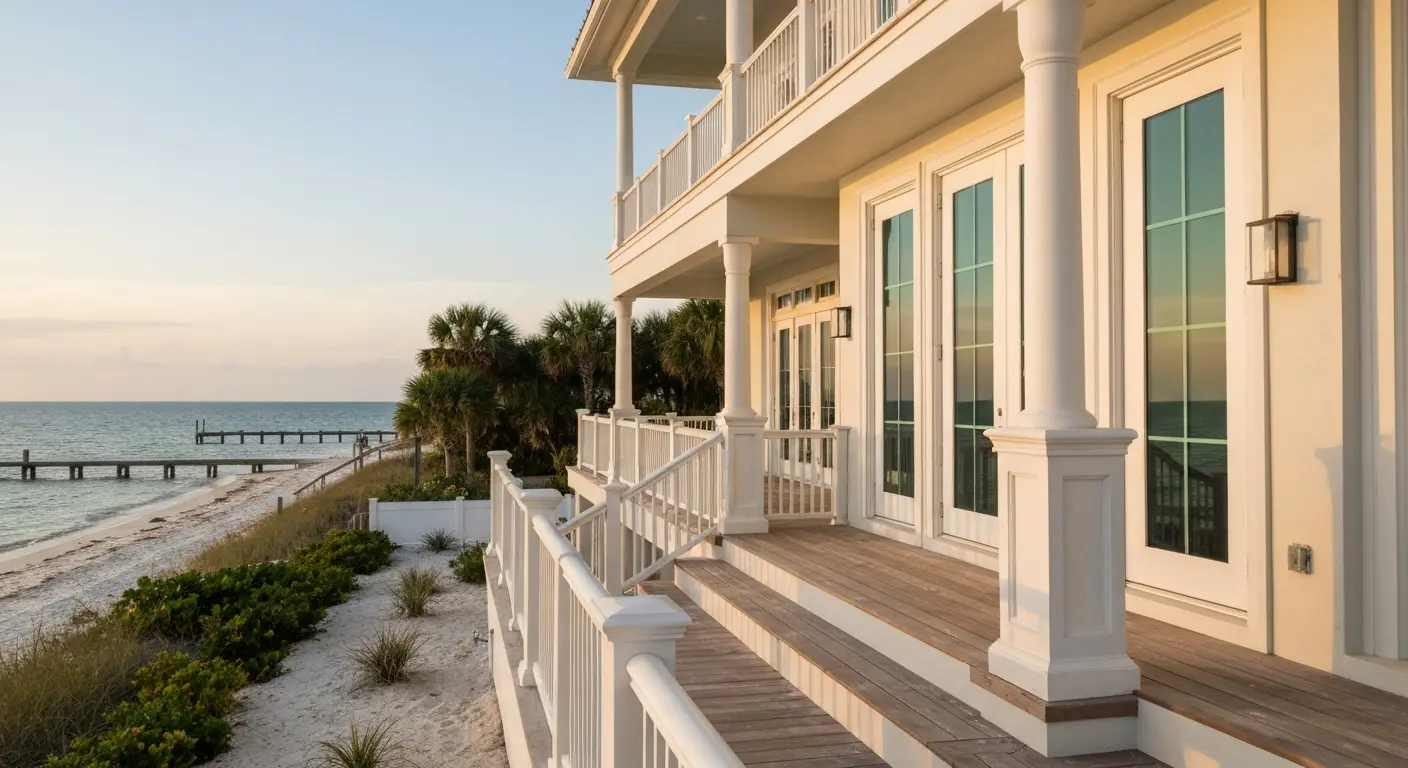
Luxury waterfront estate with private beach access near Gulf Boulevard
Intracoastal Waterway Homes
Canal-front properties with private docks, boat lifts, and protected water access. Perfect for boating families seeking a yacht-oriented lifestyle. Designs feature wet bars, dock lighting, and boat-slip-sized layouts.
Many owners dock 40–60-foot vessels in their backyards, so designs must accommodate mechanical systems, fuel lines, and waterside living spaces.
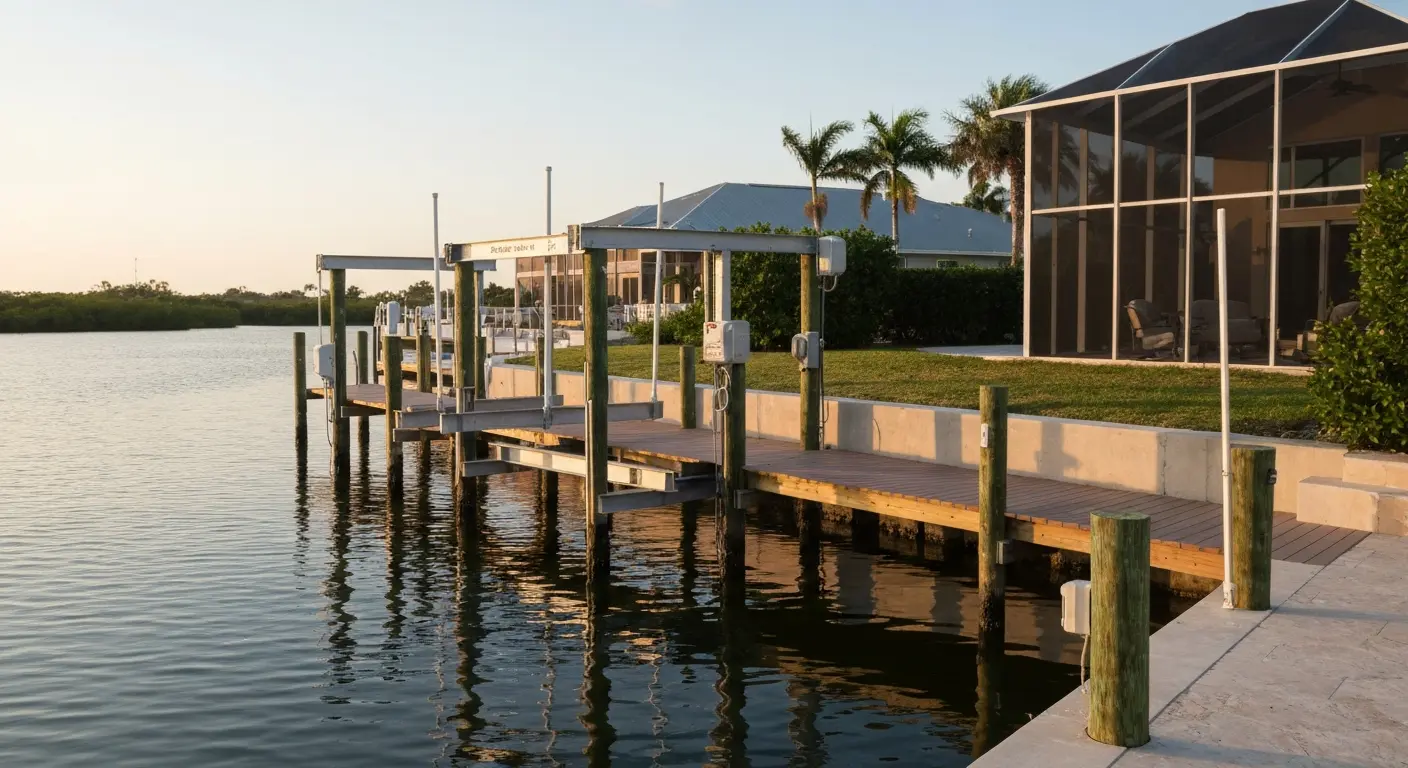
Waterfront home with boat lift and private dock near Clearwater Pass
Contemporary Coastal Renovations
Updating classic Florida ranch homes to modern coastal style. New kitchens, poolside living areas, and updated façades that respect neighborhood character while meeting current codes.
Coastal materials like fiber-cement board and galvanized steel resist salt air and humidity. Pools and deck systems must meet setback and impervious surface limits.
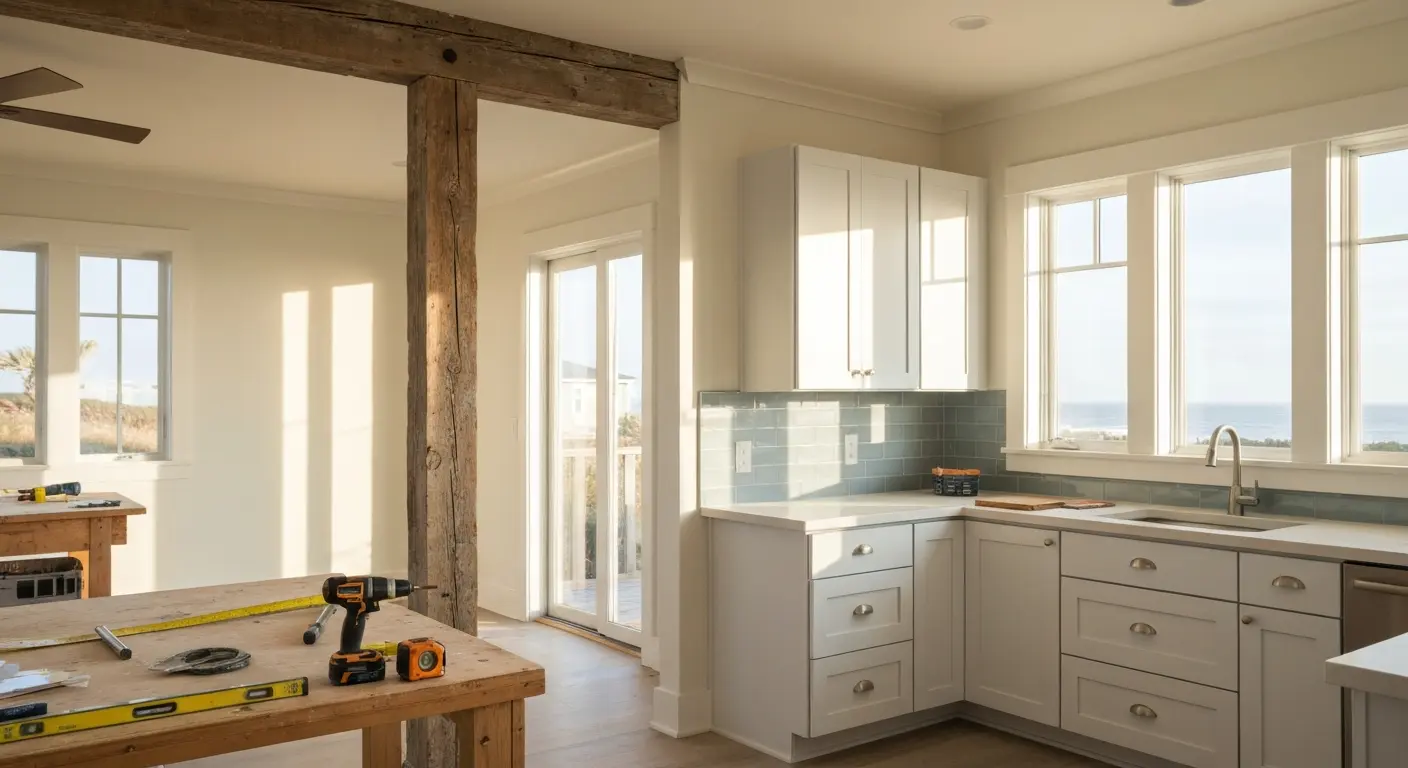
Contemporary renovation blending coastal design with updated systems
Why Coastal Building Expertise Matters
Flood Zone Compliance
Belleair Beach sits in AE and VE flood zones. We ensure your lowest floor, mechanical systems, and foundation meet FEMA elevation rules. Mistakes trigger costly rework.
Hurricane-Rated Systems
Gulf-side homes need wind-rated roofs, impact windows, and reinforced connections. Roof systems and exterior attachments must handle higher wind loads than inland properties.
Salt-Air Durability
Coastal air corrodes standard materials. We select finishes, metals, and exterior coatings rated for saltwater exposure to keep homes beautiful for decades.
Skipping coastal expertise leads to flood insurance denials, failed inspections, and storm damage. Belleair Beach's premium property values deserve premium building standards.
Local Fact: The barrier island is between the Gulf and the Intracoastal, making water management and stormwater calculations essential parts of every design.
Belleair Beach Building & Coverage
We work with homeowners throughout Belleair Beach, serving the barrier island from Gulf Boulevard westward to the Intracoastal Waterway.
Our Service Areas
- Direct Gulf waterfront along the 4,500-foot beach
- Intracoastal canal-front properties with boat docks
- Residential streets and cul-de-sacs west of Gulf Boulevard
- Morgan Beach Park neighborhood and adjacent areas
- Belle Isle, Biltmore Isles, and Coquina Shores subdivisions
We navigate permits through Pinellas County Building & Development and coordinate with the City of Belleair Beach. Permit submissions go to 444 Causeway Boulevard or via the online portal.
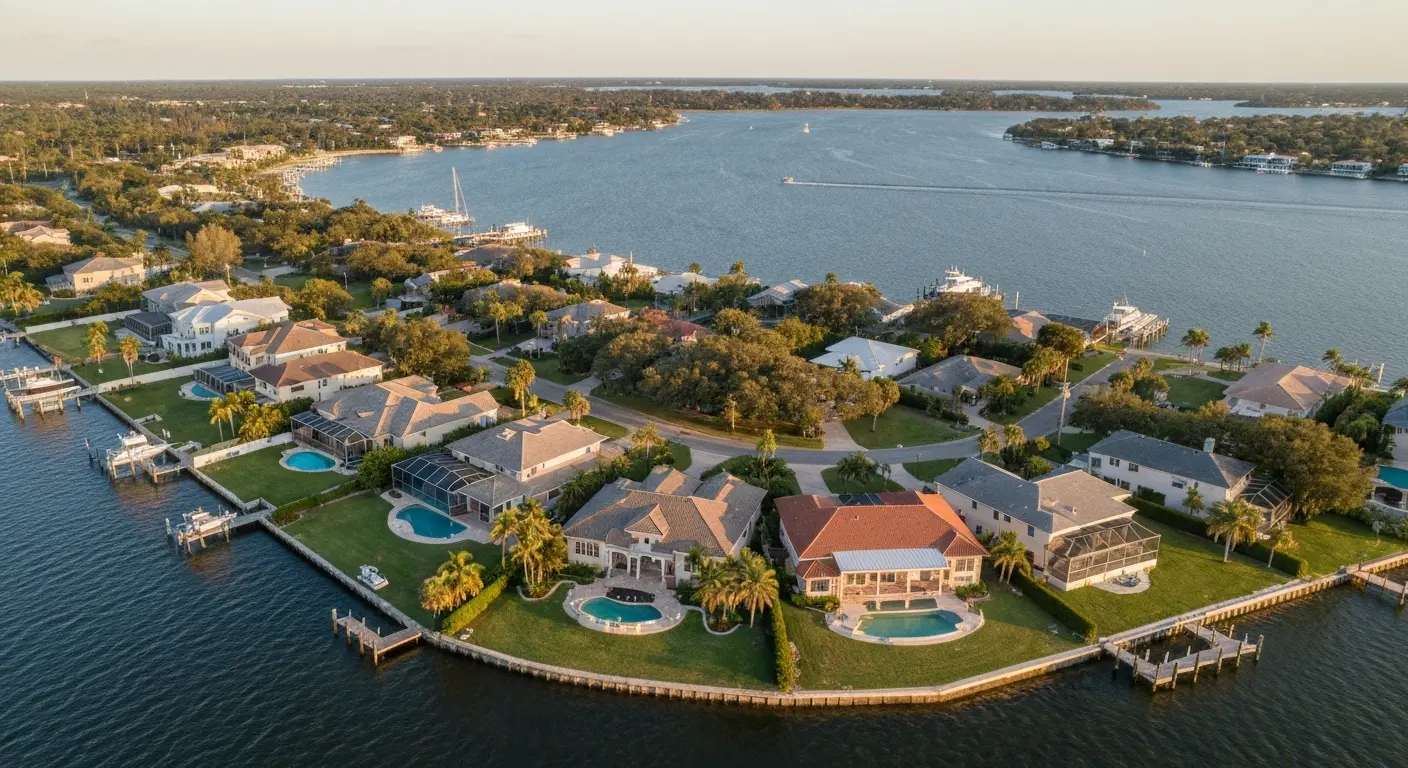
Aerial view of Belleair Beach barrier island and waterfront neighborhoods
Nearby Access: Belleair Bridge and Highway 688 connect you to Clearwater and Sand Key Park. Downtown Clearwater is 7 miles north via Highway 19.
What Sets Belleair Beach Custom Builds ApartNo HOAs. Belleair Beach has zero homeowners associations, giving you complete design freedom—as long as you meet state and federal codes.
Privacy by Design. Cul-de-sacs and quiet streets mean fewer cars and fewer sightlines. Most homes sit on large, landscaped lots with water views and minimal foot traffic.
Waterfront Lifestyle. Many homes include private docks, boat lifts, or direct beach access. Boating communities access Clearwater Pass and open Gulf waters directly.
Architectural Diversity. From classic Florida ranch to Mediterranean and contemporary coastal, the community welcomes varied styles—all built to coastal standards.
Coastal Building Facts for Custom Homes
- Permit Timeline Varies: Code review, design approval, and inspections depend on plan complexity and building official workload.
- Elevation Certificates: Required before framing and again at final inspection. Surveyors measure lowest floor elevation and setbacks.
- Stormwater Management: New construction triggers stormwater mitigation plans. Impervious surface limits apply to parking, driveways, and pool decks.
- Wind Rating Requirements: Roof assemblies, windows, and doors rated for higher wind loads than standard inland codes.
- Flood Insurance: Homes in flood zones must obtain a standard or flood insurance policy. Elevated construction often qualifies for better rates.
No HOAs. Belleair Beach has zero homeowners associations, giving you complete design freedom—as long as you meet state and federal codes.
Privacy by Design. Cul-de-sacs and quiet streets mean fewer cars and fewer sightlines. Most homes sit on large, landscaped lots with water views and minimal foot traffic.
Waterfront Lifestyle. Many homes include private docks, boat lifts, or direct beach access. Boating communities access Clearwater Pass and open Gulf waters directly.
Architectural Diversity. From classic Florida ranch to Mediterranean and contemporary coastal, the community welcomes varied styles—all built to coastal standards.
Frequently Asked Questions
What flood zone is Belleair Beach in?
Most of Belleair Beach is in AE (base flood elevation) or VE (velocity) zones. Your specific zone depends on lot elevation and proximity to the Gulf. Contact us for a flood zone map and elevation certificate.
Do I need an architect for a custom home in Belleair Beach?
Yes, coastal elevation rules and flood compliance require licensed design professionals. An architect ensures plans meet FEMA, Florida Building Code, and local setback requirements.
Can I build a dock or boat lift on my Belleair Beach property?
Docks and lifts on waterfront properties require separate environmental permits from the Florida Department of Environmental Protection. We coordinate with permitting agencies to streamline approvals.
What materials work best for coastal homes?
Fiber-cement board, galvanized metals, impact windows, and salt-rated exterior finishes resist humidity and salt air corrosion. Avoid standard wood siding and non-rated roofing materials.
Are there restrictions on pool decks or patios in Belleair Beach?
Yes. Impervious surface limits cap parking, patios, and pool decks. We calculate your lot's maximum allowable coverage and design accordingly to pass city review.
Can I renovate a historic home in Belleair Beach?
Homes on the historic registry require approval from the Historic Preservation Board. Modern improvements must respect historical character while meeting current flood and wind codes.
DISCOVER WHAT OUR CUSTOMERS HAVE TO SAY ABOUT US
REVIEWS
proudly serving these areas
Pinellas County, FL
St. Petersburg, FL
Clearwater, FL
Largo, FL
Pinellas Park, FL
Westshore, FL
Madeira Beach, FL
Treasure Island, FL
READY TO take the next step?
get a free quote TODAY!
QUICK LINKS
our services
service areas
operating HOURS
Mon: 8:00 am - 5:00 pm
Tue: 8:00 am - 5:00 pm
Wed: 8:00 am - 5:00 pm
Thu: 8:00 am - 5:00 pm
Fri: 8:00 am - 5:00 pm
Sat: Closed - Closed
Sun: Closed - Closed